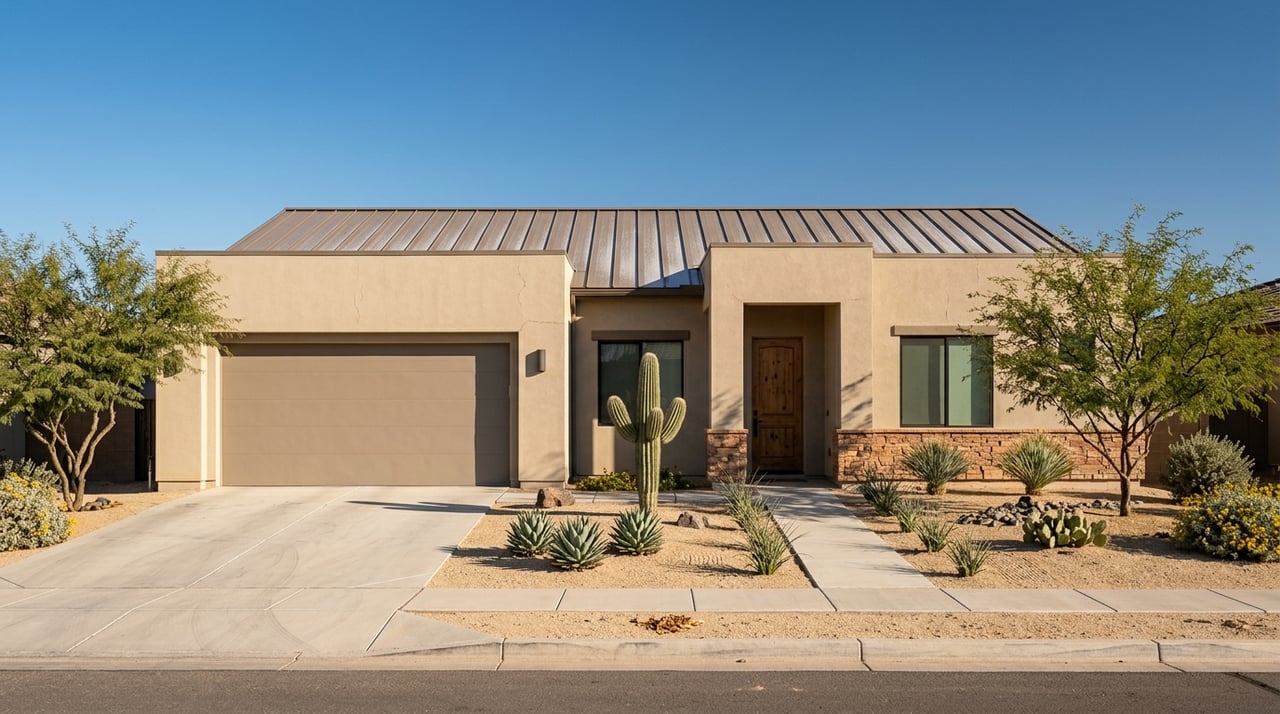
Thinking about buying land in Rio Rico and building your home from the ground up? It is an exciting idea, but the biggest mistakes usually happen before the first set of plans is ever drawn. If you want to avoid costly surprises, you need to know what makes a parcel truly buildable in Santa Cruz County. Here’s what to check first, what approvals matter most, and how to move from raw land to a finished home with more confidence. Let’s dive in.
Why buildability comes first
In Rio Rico, the path from land to home usually starts with parcel feasibility, not floor plans. Santa Cruz County’s own permit process shows that water, septic, flood review, and road-access paperwork are part of the building submittal package.
That means a parcel may look good at first glance but still face issues that affect whether, where, or how you can build. Before you spend money on design, it is smart to confirm the lot can support the home you want.
Check zoning before anything else
Zoning is one of the first items to verify because it shapes what can be built on the property. Santa Cruz County explains that land development begins with the comprehensive plan, and if your project does not fit the current land-use framework, it may require rezoning and public approvals.
If you are also thinking about splitting a parcel, that is a separate process. The county lists land division and plat applications apart from the standard building path, so it is important to know early if your plans involve more than a simple home build.
When zoning can change the timeline
If a parcel already fits your intended use, the process is usually more straightforward. If it does not, the project can shift from permitting into land-use review, which may add more steps and more time.
This is one reason buyers should look at land with a feasibility mindset. A lower price does not always mean a simpler build.
Confirm legal access and easements
A buildable lot needs more than open space. You also need to confirm legal access, easements, and where a driveway can go.
Santa Cruz County’s site-plan requirements call for details such as driveway location, utility easements, property-line bearings, and setbacks. Public Works also requires permits for right-of-way work like driveway construction or utility relocation, and if access touches a state highway, approval from ADOT is required.
Why access matters so much
Access can affect both your budget and your site design. If your driveway, trenching, or utility work crosses the right-of-way, you may need extra approvals before construction can move forward.
That is why access should be checked early, ideally before closing or as soon as possible after you go under contract.
Review floodplain status early
Floodplain review is another step that should happen before you start designing the house. Santa Cruz County Flood Control can help determine whether a parcel is in a special flood hazard area and explain what site review or floodplain paperwork may be needed.
Depending on the property, you may need a floodplain use permit or an elevation certificate. If flood concerns come up late in the process, your site plan and home placement may need to change.
Water and septic are major gatekeepers
In Rio Rico, utilities often decide whether a land-to-home project moves smoothly or stalls out. Santa Cruz County’s checklist requires either a water letter or well registry, which shows the water source must be documented before the permit packet is complete.
Liberty Utilities lists Rio Rico among its Arizona service communities, but service still needs to be verified for the specific parcel. You should never assume that utility availability for the area means direct service at your lot.
If the property will use a well
If you plan to use a private well, Arizona Department of Water Resources rules apply before drilling, deepening, or modifying a well. A Notice of Intent is required, and the work must be done by a licensed well-drilling contractor.
For domestic wells on parcels of 5 acres or fewer, the county or local health authority must review the application before it goes to the state. That added step makes early planning especially important.
If the property will use septic
If the home will use septic, Santa Cruz County Environmental Health reviews conventional septic systems. Other onsite wastewater systems go directly through ADEQ.
The county also notes that septic work is handled through separate licensed roles, including site evaluation, design, installation, repair, and modification. In plain terms, septic should be part of your site planning early, not something left until after the house footprint is finalized.
Why septic records matter
Santa Cruz County says septic records are public, but percolation records may not exist if no septic application packet was ever submitted. So even if a parcel seems buildable on paper, field testing may still be needed.
That is a key reason to request septic records early. Missing records do not always mean a property cannot work, but they do mean you may need more due diligence.
Build your team in the right order
One of the smartest ways to reduce stress is to bring in the right professionals at the right time. In Rio Rico, a land purchase usually goes better when your team is built around feasibility first and construction second.
Start with a surveyor
A surveyor is often one of the first people to involve. Santa Cruz County’s site-plan requirements depend on measured boundaries, setbacks, easements, driveway placement, and the full parcel outline.
Because of that, it is helpful to bring in a surveyor before closing or soon after. Good survey data can shape every step that follows.
Add septic and water specialists early
Septic designers, installers, well drillers, and utility staff can help you confirm key utility questions during feasibility. This is often where buyers learn whether the lot needs more testing, more paperwork, or a different site approach.
Getting these answers early can save time and reduce redesign costs later.
Bring in the builder and design team once feasible
Once the parcel looks workable, your builder, architect, or engineer can help assemble the permit set. Santa Cruz County accepts plans submitted by the owner, builder, architect, or engineer, but raw-land projects often move more smoothly when the builder and design professionals work together.
That team approach can help line up house placement, utility planning, and permit requirements before the full packet is submitted.
A typical Rio Rico land-to-home timeline
Every property is different, but most projects in unincorporated Santa Cruz County follow a similar path.
Step 1: Feasibility review
Start by confirming zoning, legal access, floodplain status, water source, septic path, and any land-division concerns. This is the stage where you want facts, not assumptions.
Step 2: Survey and concept site plan
Next, map out the lot with setbacks, driveway location, easements, and a possible building pad. This helps turn a raw parcel into a workable site plan.
Step 3: Pre-permit approvals
Before the building permit packet is complete, you may need floodplain paperwork, septic authorization, a water letter or well registry, and right-of-way permits if applicable. These items are often the real gating steps.
Step 4: Building permit review
Once your package is ready, it goes to the Santa Cruz County Building Department for plan review. The county also handles the inspection side of the process during construction.
Step 5: Construction and inspections
After permit approval, construction usually moves through site prep, grading, foundation, framing, rough-ins, finishes, and final inspection. The exact sequence can vary by parcel and project details.
Step 6: Closeout
The final stage includes final inspection and any last utility coordination. Once everything is complete, the project is much closer to move-in readiness.
Common mistakes to avoid
Rio Rico land buyers often get excited about views, price, or house design first. That is understandable, but the county process makes it clear that utilities and site constraints come before plans.
A few common mistakes include:
- Assuming utility service is available without parcel-level verification
- Designing the home before checking floodplain status
- Overlooking legal access or right-of-way requirements
- Waiting too long to request septic records
- Treating a parcel split or land-use change like a simple home permit
Avoiding these issues early can protect both your budget and your timeline.
What this means for buyers in Rio Rico
If you are shopping for land in Rio Rico, the best parcel is not always the one with the lowest price or the biggest view. It is the one that matches your goals and has a realistic path to zoning compliance, access, water, wastewater, and permitting.
That is where experienced guidance matters. A clear feasibility-first approach can help you ask better questions before you commit and connect you with the right local contacts as your project takes shape.
If you are exploring land or planning a build in southern Arizona, Ruben Moreno can help you evaluate opportunities with a practical, local perspective and guide you through the buying process with responsive, hands-on support.
FAQs
What should you check first before building on land in Rio Rico, AZ?
- Start with zoning, legal access, floodplain status, water source, and septic feasibility before spending money on home plans.
Does a Rio Rico parcel need proof of water for a building permit?
- Yes. Santa Cruz County’s building submittal checklist requires either a water letter or a well registry as part of the permit package.
Who reviews septic plans for a home build in Santa Cruz County?
- Santa Cruz County Environmental Health reviews conventional septic systems, while other onsite wastewater systems go directly through ADEQ.
Can you assume utility service is available for any lot in Rio Rico?
- No. Even though Rio Rico is listed among Liberty Utilities’ Arizona service communities, service must still be verified for the specific parcel.
When should you hire a surveyor for Rio Rico land?
- Ideally before closing or soon after, because the site-plan process depends on measured boundaries, easements, setbacks, and driveway placement.
What happens if a Rio Rico parcel is in a flood hazard area?
- Santa Cruz County Flood Control can explain whether site review, a floodplain use permit, or an elevation certificate may be needed before building.