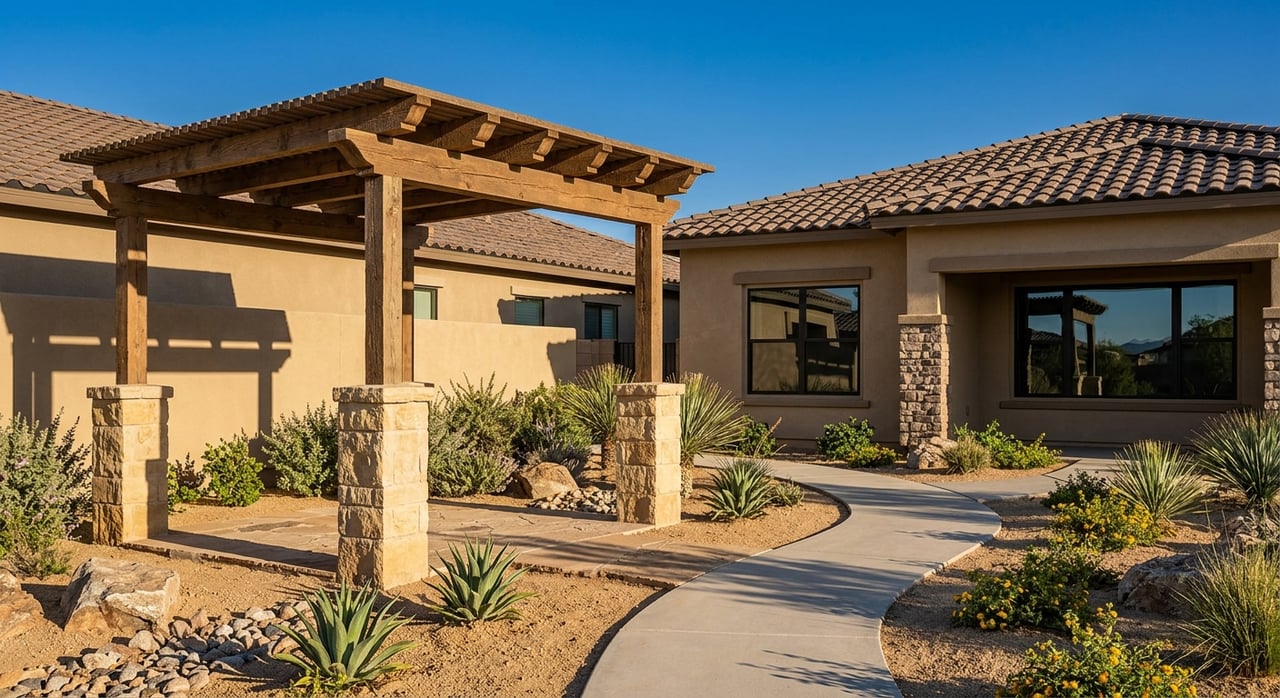
If you are looking at Sahuarita, one question matters more than many buyers expect: do you want a home, or do you want a whole lifestyle package? In this part of Pima County, many neighborhoods are built around shared amenities, planned open space, and community rules that shape daily life. Understanding how master-planned living works can help you compare costs, routines, and long-term fit with more confidence. Let’s dive in.
What master-planned living means in Sahuarita
In Sahuarita, master-planned living usually means a larger, coordinated development where homes, parks, trails, common areas, and sometimes retail or civic uses are tied together under one overall plan. Instead of neighborhoods growing lot by lot, these communities are designed with a bigger picture in mind. That often creates a more connected layout and a more structured ownership experience.
This matters because Sahuarita has a strong planned-development pattern. The town’s zoning and specific plan materials list communities such as La Jolla Verde, La Villita, Madera Highlands, Parcel 30, Quail Creek, Rancho Sahuarita, and Sahuarita Farms. For buyers, that means master-planned living is not a niche option here. It is a major part of the local housing landscape.
Sahuarita itself is an incorporated town in Pima County about 15 miles south of downtown Tucson, with a July 1, 2025 Census estimate of 37,694 residents. Town planning materials describe steady growth since incorporation in 1994. That growth helps explain why planned communities play such a large role in how the town has developed.
Why buyers consider it
For many buyers, the appeal is convenience. A master-planned community can put parks, trails, gathering spaces, and everyday services closer to home. That can simplify your routine and make it easier to use amenities you are already paying for.
Another reason is predictability. Shared spaces are maintained through an HOA or POA structure, and community standards can create a more consistent look and feel over time. If you like a neighborhood with defined rules and organized upkeep, that can be a real benefit.
Of course, the tradeoff is that you are buying into both a home and a system. That system may include dues, design review rules, and extra assessments depending on the community. So the real question is not whether master-planned living is good or bad. It is whether the structure matches how you want to live.
Sahuarita’s main master-planned examples
Rancho Sahuarita
Rancho Sahuarita is one of the best-known master-planned communities in town. The community describes itself as award-winning and offers a broad amenity package that includes Club Rancho Sahuarita, more than 350 events and programs each year, 45-plus free weekly fitness classes, pools, sports courts, kids spaces, and more than 25 miles of trails.
It also stands out because daily-use services are close by. The Rancho Sahuarita Marketplace and Sahuarita Town Center include municipal buildings, two elementary schools, a public library, a post office, an aquatics center, and nearby medical services. If you want a neighborhood where recreation and errands can feel more integrated, this is a major part of the appeal.
Rancho Sahuarita also shows how public and private planning can overlap. The town’s general plan identifies Sahuarita Lake Park as a public park built within the Rancho Sahuarita master-planned community. That layering is part of what makes Sahuarita different from a more traditional subdivision.
Quail Creek
Quail Creek offers a very different version of master-planned living. It is a 55-plus active-adult, semi-private gated community in Sahuarita with amenities that include the Madera Clubhouse, Anza Athletic Club, outdoor pool and whirlpool, 16 pickleball courts, a creative arts and technology center, and a championship 27-hole golf course.
This is a good example of why buyers should not treat all planned communities the same. Rancho Sahuarita and Quail Creek are both in Sahuarita, but they deliver very different day-to-day experiences. One is built around a broader all-ages community format, while the other centers on active-adult living and golf-oriented amenities.
The town’s general plan also identifies Quail Creek-Veteran's Municipal Park within town limits. That is another reminder that public recreation and private community structure can exist side by side in Sahuarita.
Other community variations
Sahuarita also includes variations beyond these two major examples. Rancho Resort, for example, is a gated, age-restricted community with its own private clubhouse and amenities, and its residents do not use the main Rancho Sahuarita amenity set.
That distinction matters when you compare homes online. Two communities may sound related or sit near each other, but they can have different fee structures, amenities, and access rules. You want to confirm what belongs to the property you are considering, not assume every nearby feature is included.
What you may pay for
Master-planned living often comes with recurring costs beyond your mortgage. In Sahuarita, those costs can include HOA or POA dues, optional club or golf charges, special district assessments in some areas, and regular ownership expenses such as insurance and utilities.
The town notes that Sahuarita itself does not levy a property tax, but other taxing jurisdictions do. The town also directs owners to parcel-level tax records when a Community Facilities District, or CFD, applies. That makes parcel-specific review especially important when you are budgeting.
Rancho Sahuarita costs and rules
At Rancho Sahuarita, HOA fees are paid as a single monthly assessment. According to the community, those fees fund access to Club Rancho Sahuarita, common-area maintenance, and year-round programming.
The amount can vary by neighborhood, and some neighborhoods may have extra assessments for gated access or sub-association services. The community also states that no outside memberships are sold. For buyers, that means access is tied to ownership, but you still need to verify the exact fee structure for the specific home.
Rancho Sahuarita also notes that some amenities and services are separate from the standard HOA package. Guest passes and Kids Time are examples. It also states that some events are resident-only while others are open to the public, so usage rules can vary by program.
Another practical point is design control. Exterior changes such as paint, fencing, and structural additions require HOA approval before work begins. If you like flexibility with exterior updates, that is something to think through before you buy.
Quail Creek costs and rules
At Quail Creek, POA dues are billed bi-annually. The rules split the charge into amenity, operating, and reserve components, and they also allow for special assessments.
The dues are based on one or two residents per home site, and the rules allow a half-dues associate membership. In addition, Quail Creek posts separate golf operation fees, which is a useful reminder that the base association fee may not include every activity you plan to use.
There is another cost layer to understand here. The Quail Creek Community Facilities District says property owners within the district pay a property tax of up to $0.30 per $100 of net assessed value for district assets such as roads and landscaping. The town also says some portions of both Rancho Sahuarita and Quail Creek are inside CFDs, so this is not something you want to overlook.
How to decide if it fits your lifestyle
The best way to evaluate master-planned living is to compare what you pay with what you will actually use. A strong amenity package can be a great value if you plan to use the trails, pools, fitness classes, clubhouse spaces, or golf features regularly. If not, the recurring cost may feel less worthwhile over time.
It also helps to think about how much structure you want. Some buyers love having shared maintenance, organized programming, and exterior design standards. Others prefer fewer rules and more freedom to make changes without approval steps.
Location inside the community matters too. A home may sit in an area with extra assessments, gated access fees, or sub-association dues that another nearby property does not have. Looking at the home price alone will not give you the full picture.
Questions to ask before you buy
Before you move forward on a home in a Sahuarita master-planned community, ask clear questions about both cost and access. A little homework up front can save you surprises later.
Here are some smart questions to review:
- What are the current HOA or POA dues for this specific property?
- Is the property inside a Community Facilities District?
- Are there any sub-association dues or gated-neighborhood fees?
- Which amenities are included, and which cost extra?
- Are there separate golf, guest, or activity charges?
- What exterior changes require approval?
- Are community events resident-only, public, or mixed depending on the program?
- What documents should you review for CC&Rs, rules, and assessment details?
One more key point: the Town of Sahuarita says it does not enforce neighborhood CC&Rs. So if you have questions about deed restrictions, architectural rules, or HOA standards, you need to review the community documents directly rather than assume the town will handle those issues.
Why local guidance matters in Sahuarita
On paper, two homes in Sahuarita can look similar. In real life, they may come with very different amenities, fee structures, approval rules, and lifestyle expectations. That is why local guidance matters, especially if you are relocating or comparing multiple communities at once.
A buyer-focused review should go beyond square footage and list price. You want to know how the neighborhood functions, what the monthly costs support, and whether the community setup matches the way you actually live. That kind of clarity is especially helpful in Sahuarita, where master-planned living is a major part of the market.
If you want help comparing Sahuarita communities, reviewing recurring costs, or narrowing down the right fit for your goals, Ruben Moreno can guide you through the details with clear, local insight.
FAQs
What does master-planned living mean in Sahuarita?
- In Sahuarita, master-planned living usually means a larger development where homes, parks, trails, common areas, and sometimes retail or civic uses are designed under one coordinated plan.
What are the main master-planned communities in Sahuarita?
- Town zoning and specific plan materials list communities such as Rancho Sahuarita, Quail Creek, La Jolla Verde, La Villita, Madera Highlands, Parcel 30, and Sahuarita Farms.
What is included in Rancho Sahuarita amenities?
- Rancho Sahuarita says its amenities include Club Rancho Sahuarita, more than 350 events and programs each year, 45-plus free weekly fitness classes, pools, sports courts, kids spaces, and more than 25 miles of trails.
How is Quail Creek different from Rancho Sahuarita?
- Quail Creek is a 55-plus active-adult, semi-private gated community with amenities such as golf, pickleball, clubhouse facilities, and athletic spaces, while Rancho Sahuarita offers a broader all-ages master-planned format.
Do Sahuarita master-planned communities have HOA fees?
- Yes, recurring costs can include HOA or POA dues, and depending on the community, there may also be optional club or golf charges, sub-association fees, or special assessments.
What is a Community Facilities District in Sahuarita?
- A Community Facilities District, or CFD, is a special district that can add parcel-level tax obligations for community assets such as roads and landscaping, and the town says some portions of Rancho Sahuarita and Quail Creek are inside CFDs.
Does the Town of Sahuarita enforce neighborhood CC&Rs?
- No, the town states that it does not enforce neighborhood CC&Rs, so buyers should review HOA or POA documents directly for rules and restrictions.
Is master-planned living in Sahuarita worth it?
- It can be a strong fit if you plan to use the amenities, value shared maintenance, and want a community with more structured design standards, but the best value depends on your budget and lifestyle.